

Three materials that arrive in the same shape and behave nothing alike. One is quarried rock, one is mineral bound in resin, one is fired clay, and heat, oil and a dropped pan tell them apart. No slab price here: it moves with the stone, the edge and the fabricator.
Rock, resin and fired clay
Quartz is engineered: ground mineral bound together with resin and pigment, then pressed into a slab. The mineral part is extremely hard. The resin part is a plastic, and plastic has opinions about heat.
Granite is quarried rock, cut and polished. It is as hard as that sounds, and it is also porous, which is the whole of its maintenance story.
Porcelain slab is clay and mineral fired until it vitrifies. It is the same family as floor tile, made very large and very thin, and that explains both its strengths and its one weakness.
Side by side on what you live with
Everything below follows from those three descriptions. Read the column for the way you actually cook rather than the one for the kitchen you would like to photograph.
The same six questions, three answers
None of this is a ranking. Each column is a different set of things to be relaxed about and a different set to watch.
Quartz
- Heat: fine with warm cookware, unhappy under a pan straight off the burner
- Stains and acid: shrugs off daily spills, wine, oil and citrus included
- Chips and scratches: hard, though a board still treats your knives better
- Sealing: none, ever. Soap and water is the entire routine
- Pattern: consistent and predictable, which is why a long island reads as one piece
- Sunlight: worth asking about for a wall of glass or a counter that gets the afternoon
Granite
- Heat: takes it well, being rock that was made in it
- Stains and acid: resists once sealed, with oil by the hob and citrus on pale stone the two to wipe
- Chips and scratches: hard, and a honed finish hides small marks a polished one shows
- Sealing: a periodic habit, and a bead of water on the surface tells you when
- Pattern: every slab is its own, so you choose the slab rather than the colour
- Sunlight: no issue at all, which is why it has always lived happily outdoors
Porcelain slab
- Heat: the most tolerant of the three, having been fired hotter than your kitchen gets
- Stains and acid: close to inert, though a matte finish shows oil until it is wiped
- Chips and scratches: very hard, with the caveat below about a sharp arris
- Sealing: none. A neutral cleaner and the fabricator’s own care sheet
- Pattern: available in very large sheets, which is what gets the seams out of a long run
- Sunlight: stable in it, which makes it the usual answer for a glassy room
Heat, and what it actually does
The heat question is the one most often answered wrongly in a showroom. All three take a hot mug and a warm tray without complaint. The test is a cast-iron pan lifted straight off a burner.
Under that, the resin in quartz can scorch or craze, and the mark does not come out. Granite and porcelain do not care. If heavy pans and high heat are how you cook, that is a real reason to choose between them.
The other heat risk is thermal shock, which is a stone problem rather than a surface one. A cold slab and a very hot pan in one spot is an unkind thing to do to any worktop, and a trivet is a cheap habit.
Stains, acid and the sealing question
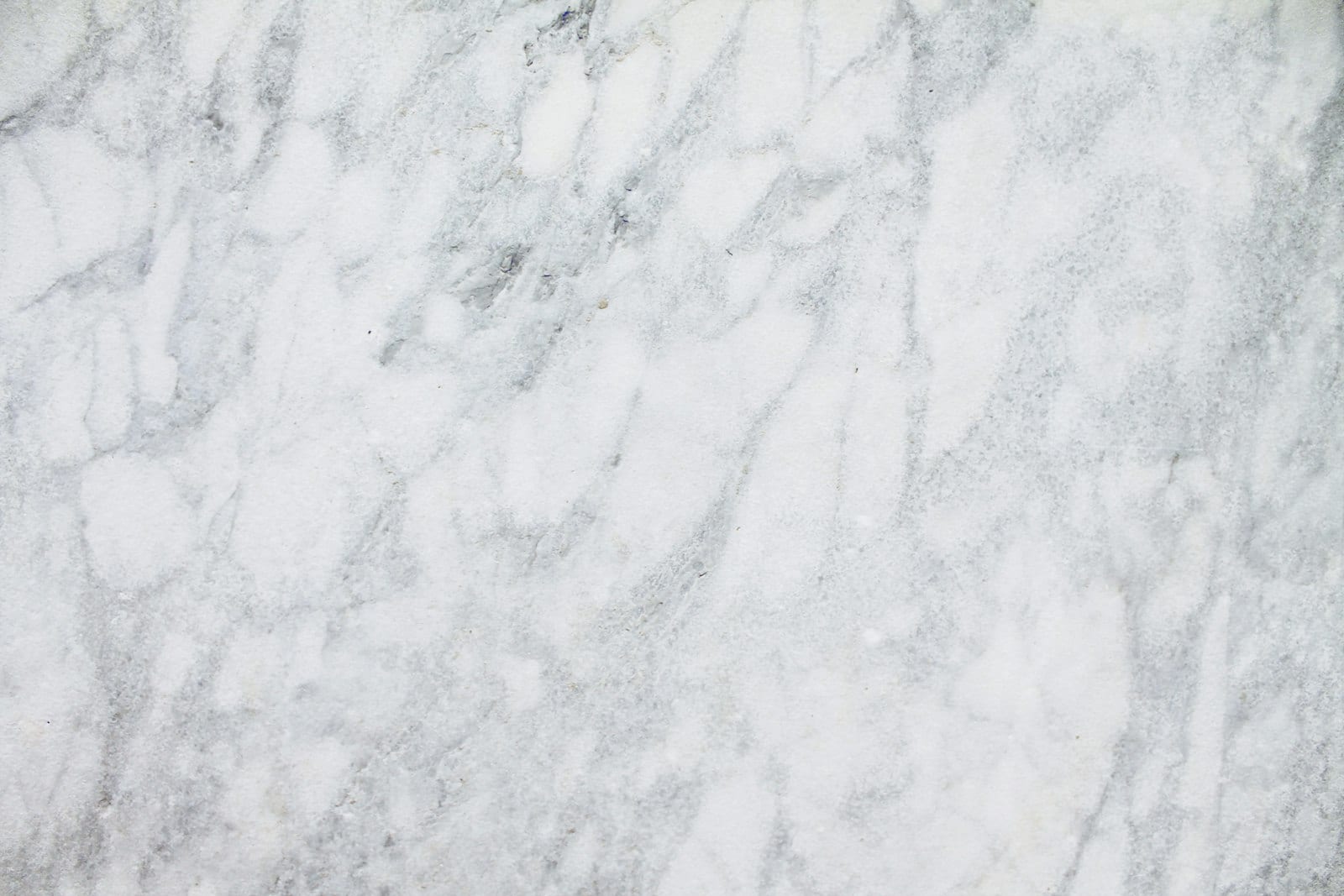
Porosity is the dividing line. Quartz and porcelain are effectively closed surfaces, so a spill sits on top and waits to be wiped. Granite has structure for a liquid to get into.
Sealing closes that structure. It is a wipe-on job on a cycle, and the water-bead test tells you when the cycle has come round. A pale granite between a hob and a sink is the version that asks most often.
Acid is the quieter risk. Lemon, vinegar and some cleaners will etch an unsealed natural stone, and nothing about that is reversible with a cloth. On quartz and porcelain the same spill is a wipe.
One honest point against porcelain: a matte finish shows fingerprints and oil more readily than a polished one. It all comes off, and it does want the cloth.
Edges, joins and where the seam lands
This is the part owners rarely ask about and then notice daily. A worktop is cut from slabs, and the slab size decides where the joins have to be.
A consistent material hides a seam, which is why quartz is the easy answer for a long island. A natural slab does not, so the seam is placed deliberately and the veining is laid out before anything is cut. Ask to see the layout if book-matched veining matters to you.
Porcelain comes in sheets large enough to take the seams out of a run altogether, a full-height splash included. The thin body is also why its edges are specialist work.
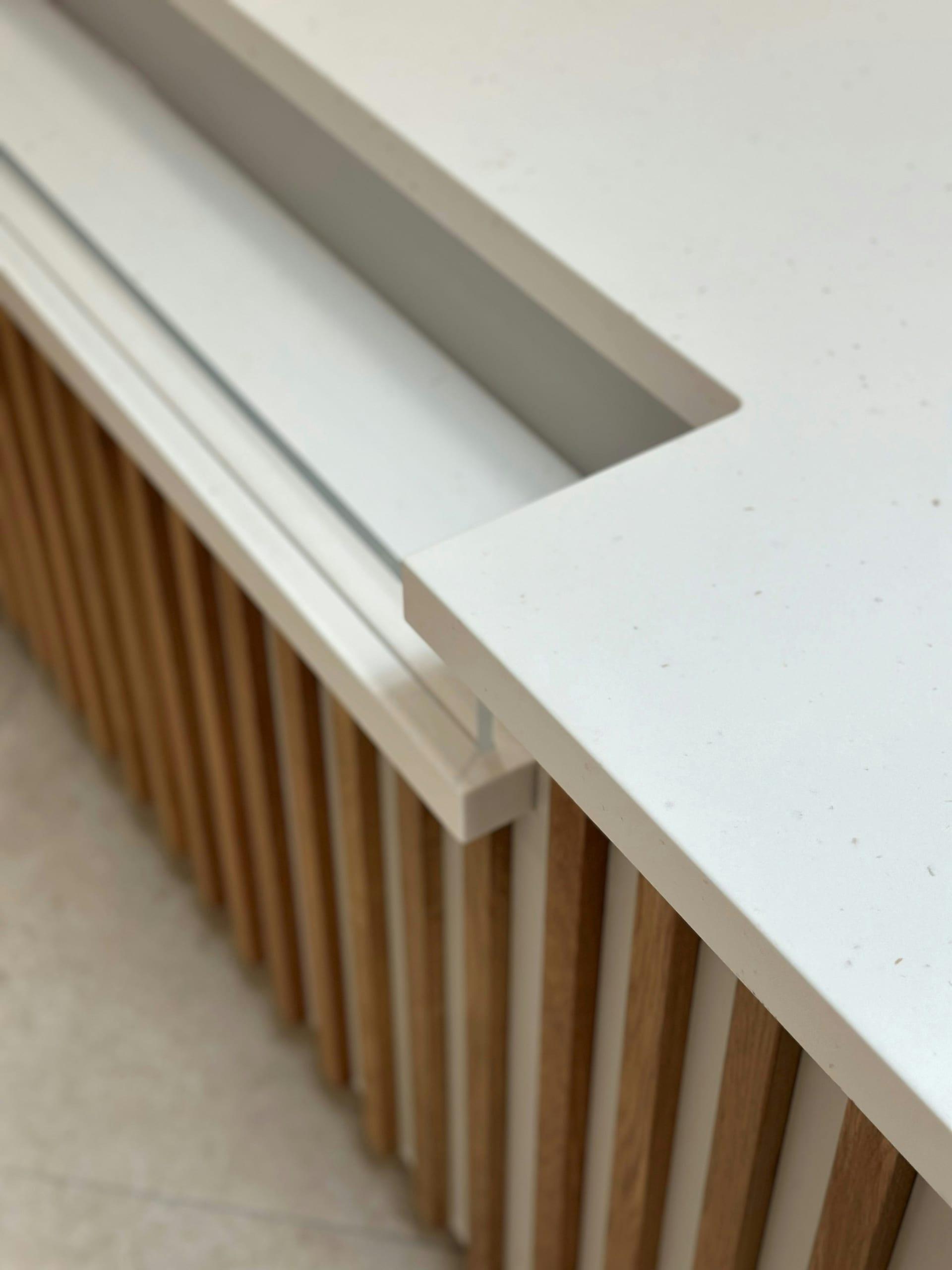
A mitred edge, a waterfall end or an integrated drainboard all add fabrication. On porcelain the mitre is the thing to inspect: ask a fabricator to show you their inside corners before committing.
A hard surface can still chip, and it chips at a sharp arris where something catches it square on. A slightly eased edge is a quiet piece of insurance.
How a worktop is measured and fitted
A worktop is the one element in a kitchen made to fit what was actually built rather than what was drawn. That makes the order of operations matter more here than anywhere else in the room.
Finish the appliance list before templating. A hob, a sink or a tap that changes afterwards changes the template with it.
Confirm the sink model and the number of tap holes, so the cutouts match the fixtures.
Decide the edge profile and any mitre or waterfall detail, because both are fabrication time rather than a finish applied later.
Mark the seam positions on the drawing, and approve the slab layout before anything is cut.
Settle the splash, including where the outlets land, if it is going full height.
Keep the care sheet for the material and the finish you chose. The routines are not interchangeable between them.
The routine each one asks for
Maintenance is where a worktop decision turns into a daily one. None of the three is demanding. They are demanding about different things.
What looking after it actually means
- Quartz
- Soap and water, and no sealing at any point. A trivet for anything straight off the heat, and a board for knives.
- Granite
- Soap and water day to day, plus sealing on a cycle. A bead of water sitting proud on the surface says it is still sealed.
- Porcelain
- Soap and water, no sealing, and a neutral cleaner. A matte finish wants the cloth a little more often than a polished one.
- All three
- Wipe acid spills rather than leaving them, keep direct heat off the resin, and cut on a board. None of that is onerous, and all of it is the difference.
Choosing for the way you cook
None of the three is the right answer in general. Each is the right answer to a particular household, so the useful question is which of these descriptions sounds like yours.
- You cook hard, with cast iron and high heat: granite or porcelain, and the pans stop being a worry.
- You want the surface to ask nothing of you: quartz, with no sealing and a pattern that holds no surprises.
- You have a long island and want it to read as one piece: a consistent material, which points at quartz or a large porcelain sheet.
- You love natural movement and want a slab nobody else has: granite, chosen in person from the slab rather than from a sample.
- The counter sits in full sun, or runs out towards a patio: porcelain is the one that is stable in it.
- You are working around older millwork: a honed or satin granite sits beside it more comfortably than a high gloss.